
The 2nd Limb - A Formula for a Better Self
Emily B | MAY 15, 2024
8limbsofyoga
patanjali
niyamas

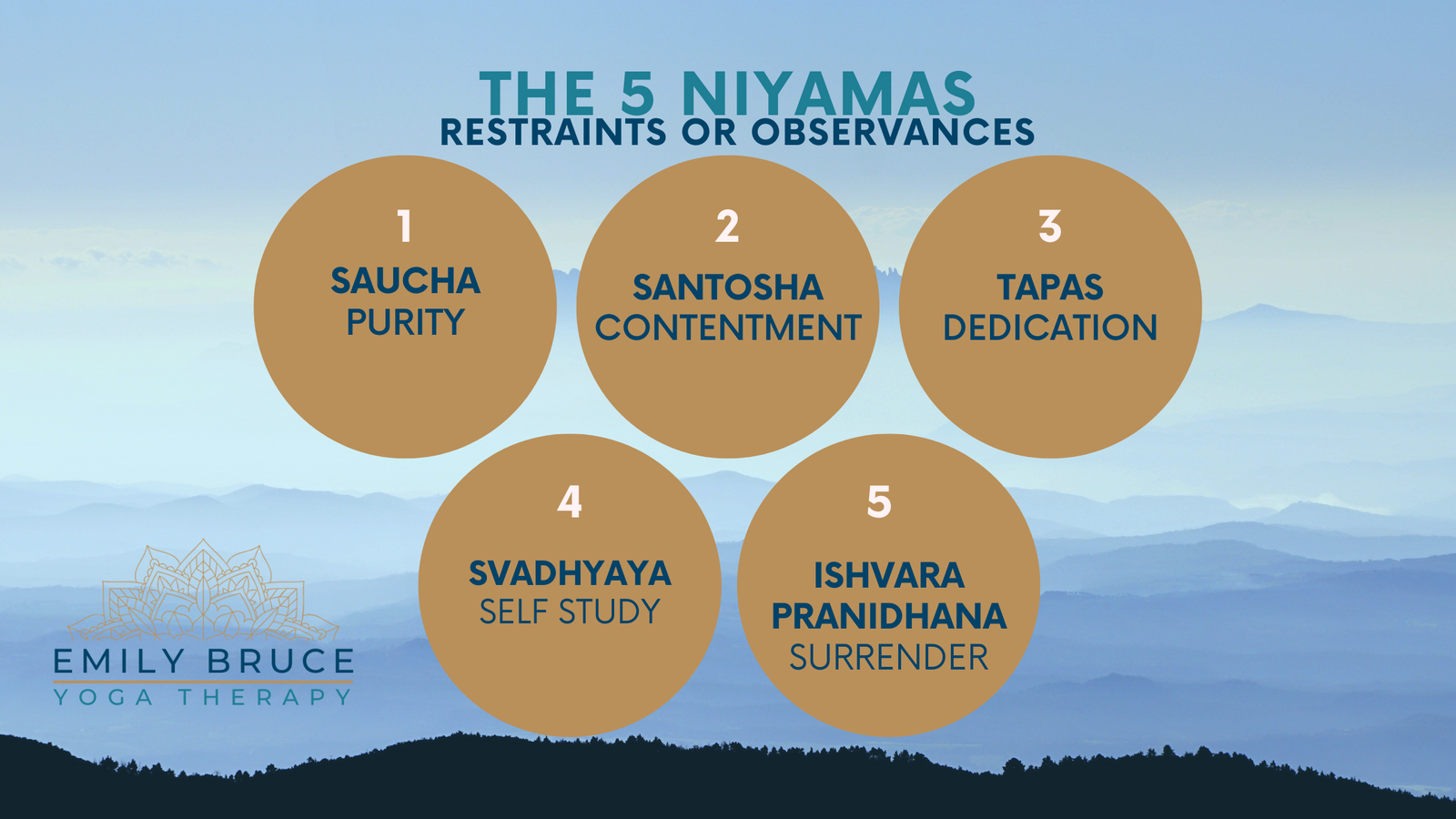
Building on our work last term, the focus of our recent yoga classes has been on the Niyamas, the second limb of Patanjali's Yoga Sutras. While the Yamas provide guidelines for our interactions with others, the Niyamas offer principles for self-discipline and inner observances. Just like the Yamas, the Niyamas are not merely concepts confined to the yoga mat; they extend into all aspects of our lives, offering profound insights and opportunities for growth.
- Saucha - Purity: Saucha encourages us to purify our body, mind, and surroundings, creating space for clarity and transformation. This involves not only physical cleanliness but also mental and emotional purification. By releasing clutter and negativity, we create a fertile ground for growth and self-discovery.
- Santosha - Contentment: Santosha reminds us to find contentment and gratitude in the present moment, regardless of external circumstances. It's about embracing life as it is, rather than constantly striving for more or longing for what we don't have. By cultivating Santosha, we cultivate inner peace and joy, regardless of the ups and downs of life.
- Tapas - Discipline: Often associated with fiery determination, Tapas encourages us to cultivate self-discipline and perseverance in pursuit of our goals. It's not about pushing ourselves to the brink of exhaustion, but rather about making conscious choices that align with our values and aspirations. By practicing Tapas, we develop the strength and resilience to overcome obstacles and stay focused on our path.
- Svadhyaya - Self-Study: In a world filled with distractions, Svadhyaya invites us to turn inward and explore the depths of our being. Through self-reflection, study, and contemplation, we gain insight into our deepest selves. This insight can uncover limiting beliefs, patterns, and conditioning, allowing us to cultivate greater self-awareness and personal growth.
- Ishvara Pranidhana - Surrender to the Divine: Ishvara Pranidhana invites us to surrender our ego and desires to a higher power or greater purpose. It's about letting go of the illusion of control and trusting in the inherent wisdom of the universe. By surrendering to the divine (as we define it), we cultivate humility, acceptance, and a deeper connection to something greater than ourselves. I also had something of an epiphany this week which relates to this Niyama: In meditation I saw very clearly that the thinking mind is like a being driving a boat and the meditating (or surrendered mind) is like on who is snorkelling - when driving we a focused, directed and 'in control' (?) but when snorkelling we are floating, open, curious and free - carried where the sea carries us and ready to see what life shows us.
Just as with the Yamas, exploring the Niyamas off the mat can lead to profound insights and personal transformation. Take some time to reflect on these principles, journal about your experiences, or discuss them with others. How do they show up in your life? How can you embody them more fully? I'd love to hear your thoughts and insights, so feel free to reach out via email or social media. Let's continue this journey of self-discovery and growth together! 🌿🧘♂️✨
Emily B | MAY 15, 2024
Share this blog post

 OfferingTree